

Construction remains one of the most high-risk industries globally. Studies show that almost 70% of incidents occur due to poor planning and unassessed risks on site. Work changes daily, conditions vary every hour, and unexpected hazards emerge constantly. In such dynamic environments, Pre-Task Planning Best Practices are critical to ensure that every activity is executed safely, accurately, and without delays.
Traditional site operations often depend on manual logs, verbal instructions, and scattered communication, which easily lead to misinterpretation, rework, cost leakage, and safety violations. This blog will help you understand why and how implementing Pre-Task Planning Best Practices strengthens operational control and ensures smoother execution from planning to handover.
Whether you are a project manager, contractor, EPC company, builder, or site engineer, investing in systematic Pre-Task Processes ensures better outcomes—fewer incidents, higher productivity, and improved accountability.
Why Pre-Task Planning Best Practices are Essential in Construction
Construction companies today operate under tight deadlines, competitive budgets, and strict compliance requirements. Yet, execution challenges keep growing due to:
- Fragmented communication among field and office teams
- Inaccurate DPRs and BOQs
- Material mismanagement and wastage
- Manual task planning with Excel sheets & WhatsApp
- Low visibility into on-ground realities
- High rework due to scope deviations
- Labor inefficiencies and idle time
Across infrastructure projects, roads & highways, commercial & residential buildings, and EPC environments, these inefficiencies lead to:
- On average, 30% cost overruns
- Nearly 25% productivity loss
- Rework accounting for 5–15% of project costs
- Delays of several weeks or months
The core reason: Teams jump into execution without proper planning, hazard identification, or consensus on the task workflow.
Manual Processes Increase Errors and Safety Risks
Depending on paper-based updates, untracked task assignments, and disconnected systems often result in:
- No clarity on who does what
- Risky improvisation on site
- Last-minute changes with no documented trace
- Lack of accountability
This is where digital Pre-Task Planning workflows change the game.
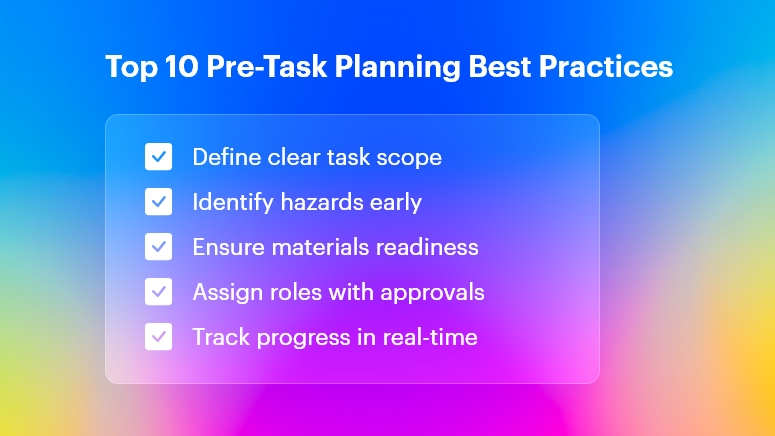
Top 10 Pre-Task Planning Best Practices to Reduce Incidents
Below are the most critical Pre-Task Planning Best Practices construction teams should deploy daily. Each recommendation is fully actionable and proven to drive safer, smarter site execution.
1. Start Every Task with a Clear Scope Definition
- Define the exact work boundary, required manpower, tools, materials, and dependencies to avoid guesswork.
- When the team aligns on expectations, execution becomes faster and safer, reducing rework.
Use OConstruction to assign tasks with scope clarity, resource mapping, and activity checklists.
2. Involve Supervisors, Safety Officers & Skilled Workers in Planning
- Workers who actually perform the task know the real risks and execution gaps better than anyone else.
- Teams that co-plan tasks own accountability, ensuring better compliance.
OConstruction enables collaborative communication between all stakeholders in real-time.
3. Identify Hazards and Controls Before Work Begins
- Conduct ASHA (Activity-Specific Hazard Assessment) to spot risk factors like working at height, lifting, and energy exposure.
- Define preventive and emergency controls before actual execution.
OConstruction lets you store and standardize hazard control checklists across sites.
4. Confirm Material, Tools & Equipment Availability
- Missing materials lead to unsafe improvisation, shortcuts, and delays.
- Ensure all inventory, machinery, and consumables are available before work.
OConstruction provides real-time material tracking and purchase workflows.
5. Assign Roles with Clear Communication & Approval Flow
- Accountability minimizes errors — everyone must know their tasks and authority limits.
- Pre-approved workflows ensure no unauthorized work triggers hazards.
OConstruction’s task assignments, approvals & flow-based controls enforce discipline.
6. Digitize Daily Logs and DPRs for Real-time Monitoring
- Paper DPRs delay decisions and hide critical issues like delays or unsafe changes.
- Digital updates let the office team act immediately before risks escalate.
With OConstruction’s DPR Automation, sites achieve 100% accuracy and zero delays in reporting.
7. Track Work Progress Continuously Against Baseline
- Pre-task plans often fail due to unmonitored deviations.
- Daily progress checks ensure scheduled logic stays intact, preventing stacking delays.
OConstruction offers Gantt tracking, baselines & instant variance insights.
8. Conduct Toolbox Talks Before Task Execution
- Safety and task reminders given right before execution have the most impact.
- Workers stay alert, aligned, and aware of what could go wrong.
Use OConstruction to record toolbox talk attendance and topics for compliance.
9. Stop Work When Conditions Change Unexpectedly
- Weather, site congestion, structural shifts — conditions change fast.
- Work must pause until new hazards are assessed and mitigated.
With OConstruction, teams can raise instant alerts and ensure approvals before restarting.
10. Review Lessons Learned and Update Future Tasks
- Every task provides insights to refine planning templates and processes.
- A structured feedback loop improves quality, productivity & safety culture over time.
OConstruction standardizes learnings into repeatable digital workflows for all sites.
Bonus: Avoid These Common Mistakes in Pre-Task Planning
- Skipping hazard analysis when the team feels “experienced.”
- Relying on verbal task instructions instead of documented workflows
- Assuming materials will arrive on time without digital tracking
- Leaving approvals pending during rush-hour operations
- Failing to capture deviations from plan vs. execution
A well-documented Pre-Task Planning Best Practices checklist solves these errors before they impact outcomes.
Success Story: Real Results with OConstruction
For example, SkyBuild Developers, a mid-sized real estate contractor, adopted OConstruction to streamline Pre-Task Planning along with BOQ, DPR, and schedule tracking.
Earlier, SkyBuild faced:
- Frequent rework due to unclear task definitions
- Unreported deviations are causing delays and quality issues
- Safety incidents from unmanaged hazards
After implementing OConstruction:
- 20% improvement in worker productivity
- 30% reduction in rework through proper pre-task controls
- DPR submission time dropped from hours to minutes
- Better cost control with accurate material tracking
- Full visibility across multiple projects
Their execution transformed from reactive firefighting to proactive, safe, and quality-driven delivery.
Key Takeaways
Here’s why investing in Pre-Task Planning Best Practices pays off:
- Ensures safety-first execution with hazard visibility from day one
- Improves task clarity and accountability
- Reduces rework, delays, and cost overruns
- Enhances material & labor utilization efficiency
- Drives real-time field–office synchronization
With Pre-Task Planning Best Practices, your teams can take smarter decisions, faster — while protecting lives and profits.
FAQs
Q. What are Pre-Task Planning Best Practices in Construction?
They include structured task definition, hazard identification, approvals, and digital workflows that help reduce incidents and improve compliance.
Q. How do Pre-Task Planning Best Practices reduce safety incidents?
They help identify and control risks before work begins, ensuring safer execution and stronger accountability.
Q. Why should Pre-Task Planning Best Practices be digitized?
Digital tools eliminate delays in communication and ensure real-time updates, approvals, and resource visibility across every task.
Q. How does OConstruction support Pre-Task Planning Best Practices?
It provides task assignments, DPR automation, progress tracking, hazard checklists, and collaboration tools for all teams.
Q. How often should Pre-Task Planning be done?
Daily, before every major site activity, especially when work conditions or schedules change.
Q. Who is responsible for Pre-Task Planning?
Supervisors, engineers, safety officers, and workers — everyone involved in the task must contribute.
Q. Do Pre-Task Planning Best Practices help reduce costs?
Yes. They prevent cost leakage from rework, delays, and material wastage, improving profitability.