
Every construction project involves risk — but some tasks pose far greater dangers than others. OSHA reports that nearly 20% of construction fatalities occur during high-risk activities such as working at heights or operating heavy machinery.
To keep workers protected and operations compliant, project teams must hold regular and well-planned toolbox talks. These short, focused safety meetings reinforce awareness, prevent incidents, and ensure teams understand hazards before starting work.
This guide highlights the top toolbox talk topics for high-risk construction activities and explains how to plan, deliver, and document your talks more efficiently using digital workflows with OConstruction.
Regulatory Standards
-
OSHA Standards for Toolbox Talks
While OSHA doesn’t mandate a specific format for toolbox talks, 1926.21(b)(2) requires employers to instruct workers on health and safety practices relevant to their tasks.
Toolbox talk topics should align with major OSHA requirements, including:
- Fall Protection — 29 CFR 1926.501
- Excavation Safety — 29 CFR 1926.651
- Electrical Safety — 29 CFR 1926 Subpart K
- PPE — 29 CFR 1926 Subpart E
Maintaining clear records of discussions, attendance, and corrective actions helps demonstrate compliance.
-
ISO Standards and Best Practices
ISO 45001:2018 emphasizes risk reduction through:
- Worker participation in safety decisions
- Continuous hazard assessment
- Transparent communication and reporting
Aligning toolbox talks with ISO principles promotes a strong safety culture and more consistent performance.
Essential Toolbox Talk Topics for High-Risk Activities
Every jobsite is unique — but the following topics remain the highest priority across most projects.
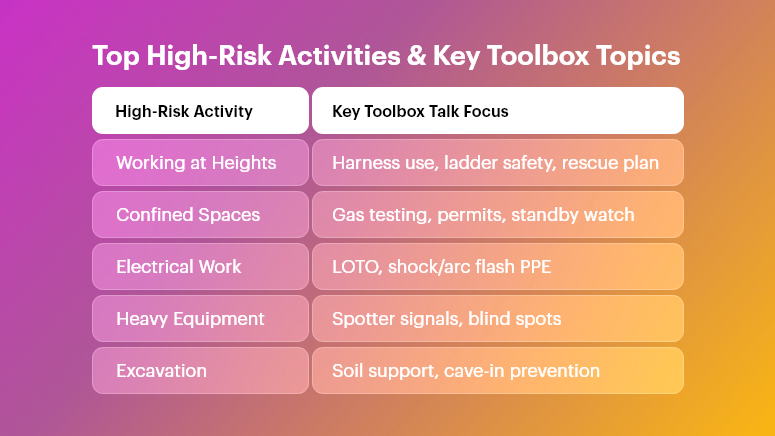
Working at Heights
- Harness and lifeline use
- Ladder inspection and safe positioning
- Guardrail and scaffolding checks
- Rescue procedures for falls
Confined Spaces
- Permit-required confined space entry
- Oxygen and gas monitoring
- Entry/exit volunteers and standby watch
- Reliable communication systems
Electrical Safety
- Lockout/Tagout (LOTO)
- Ground fault circuit protection
- Power line approach distances
- Shock and arc flash PPE
Hazardous Materials
- Proper labeling (GHS/Hazard Communication Standard)
- Handling and chemical compatibility
- Spill prevention and emergency cleanup
- Storage area ventilation and segregation
Heavy Equipment Operation
- Pre-start and walk-around inspections
- Spotter communication and hand signals
- Load stability and traffic control routes
- Blind spot awareness and pedestrian safety
Excavation and Trenching
- Soil classification and slope protection
- Daily inspections by a competent person
- Safe distance for spoils and heavy loads
- Preventing cave-ins and engulfment
Preparing Effective Toolbox Talks
Successful meetings start with proper preparation:
- Identify current jobsite hazards
- Select topic based on upcoming work
- Research OSHA and ISO requirements
- Include visuals or live demonstrations
- Schedule talks consistently (daily or weekly)
The goal is clarity, relevance, and practicality.
Delivering Engaging Toolbox Talks
Workers need information they can relate to — not lectures.
Effective communication tips:
- Share real incidents and near-misses
- Use simple, direct language
- Ask questions and encourage opinions
- Allow different presenters to take turns
- Keep meetings to 10–15 minutes
Engagement drives adoption — and adoption drives results.
Follow-Up and Documentation
A toolbox talk only works if proper action follows.
Your documentation procedure should include:
- Attendance tracking (digital preferred)
- Notes on hazards discussed
- Assigned actions with deadlines
- Post-meeting hazard verification
- Triggering refresher sessions when needed
Digital logs speed up audits, compliance checks, and reporting.
Manual vs. Digital Workflows Comparison
| Aspect | Manual Workflow | Digital Workflow (OConstruction) |
| Planning | Paper calendars, email reminders | Automated scheduling |
| Delivery | Printed sheets, verbal | Mobile presentations & videos |
| Attendance | Sign-in sheets | GPS-enabled mobile check-in |
| Records | Paper binders | Cloud-based storage & instant access |
| Reporting | Manual spreadsheets | Dashboards & analytics |
| Follow-Up | Sticky notes, email chains | Task assignments & alerts |
Digital workflows ensure zero lost data and greater accountability.
Digital Toolbox Talks and Software-Enabled Workflows
Modern technology empowers safety teams to deliver:
- Interactive training (images, videos, quizzes)
- Instant updates when regulations change
- Photo-based incident reporting
- Integration with OConstruction DPR and forms
- Trend tracking and predictive insights
Compliance becomes easier — and crews stay more informed.
Toolbox Talk Checklist
(Use for planning and auditing safety talks)
- Topic aligns with job hazards
- Visual examples ready
- Attendance capture method set
- PPE demonstration included
- Follow-up actions documented
- Feedback collection planned
Daily Safety Briefing Template
Fields include:
- Date and location
- Topic and hazards
- Presenter name
- Workers in attendance
- Corrective actions to complete
Ideal for high-risk tasks that require daily safety reviews.
Real-World Examples
- A high-rise contractor detected missing guardrails during a working-at-heights talk and prevented a major incident
- A chemical storage crew improved audit scores after daily Hazard Communication reviews
- A tunneling project cut confined-space delays by 30% using digital permits and talk templates
Small conversations lead to major improvements.
Frequently Asked Questions
-
What is a toolbox talk?
A short safety meeting that focuses on hazards related to upcoming work.
-
How often should toolbox talks be held?
Daily for high-risk tasks — weekly for general safety awareness.
-
Does OSHA require toolbox talks?
OSHA requires safety training but not a fixed toolbox talk format.
-
Can toolbox talks be digital?
Yes — digital formats improve recordkeeping, participation, and compliance.
-
Who should lead toolbox talks?
A safety officer or supervisor — but rotating presenters encourages engagement.
-
What are the most important topics?
Working at heights, confined spaces, electrical safety, hazardous materials, heavy equipment, and excavation.
-
How do digital workflows improve talks?
They automate scheduling, tracking, reporting, and evidence compliance.
-
How does OConstruction help?
With templates, digital sign-offs, hazard logs, photo evidence, and dashboards.