
Construction projects today are under more pressure than ever. According to leading industry studies, over 60% of projects run over budget, while nearly 70% experience schedule delays due to miscommunication, inaccurate DPRs, scattered data, and manual updates. These issues don’t just slow work down, they directly impact profitability, cash flow, and client trust. Therefore, choosing the right construction management solution has become a mission-critical decision for project managers, contractors, EPC companies, QS teams, and site engineers.
This blog outlines the Top 10 must-have features you should expect from any modern construction management solution. You will learn how purpose-built tools streamline BOQ management, automate DPR workflows, improve field-to-office visibility, and help teams execute projects with fewer errors, lower costs, and better accountability.
Whether you handle residential, commercial, highway, infrastructure, or industrial construction, this guide explains how a construction management solution elevates your operations and sets your projects up for predictable success.
Why Construction Teams Need a Powerful Construction Management Solution
Construction is complex, fast-changing, and highly interdependent. One small delay — such as a late DPR, missing material, or inaccurate BOQ — can trigger cascading issues across the entire schedule. This is exactly why a robust construction management solution is no longer optional.
Growing Business Pressures in Construction
Modern construction companies face significant operational challenges:
- Cost overruns caused by inaccurate estimates, fluctuating material prices, and untracked expenses, which lead to escalated budgets and reduced profit margins.
- Material wastage due to poor tracking and lack of real-time site visibility, resulting in unused inventory, theft, pilferage, or emergency purchases at higher rates.
- Rework caused by miscommunication or outdated drawings, consuming 10–15% of project costs and unnecessary labor hours.
- Scattered data stored in Excel sheets, WhatsApp messages, emails, and paper diaries, making it impossible to maintain a single source of truth.
- Delayed DPR submissions, which leads to inaccurate reporting, billing delays, and poor decision-making.
- Disconnected tools that fail to sync field activities with office teams, slowing approvals, billing, purchasing, and planning cycles.
These problems occur across all construction segments:
- Real estate developers struggle with multi-site coordination and contractor monitoring.
- Infrastructure and road projects face challenges with heavy equipment tracking, material consumption, and schedule slippages.
- Residential and commercial builders manage high-velocity tasks and subcontractor timelines.
- EPC companies deal with large-scale BOQs, lengthy approval cycles, and risk of data duplication.
Why Traditional Methods Fail
Manual workflows cannot keep up with the speed of modern construction:
- Excel sheets break easily, lack version control, and create data silos, making it difficult for teams to stay aligned.
- WhatsApp messages are unstructured, leading to miscommunication, lost instructions, and zero historical records.
- Paper-based logs and manual DPRs are prone to errors and delays.
- Non-integrated tools create blind spots, making cost control and project tracking inefficient.
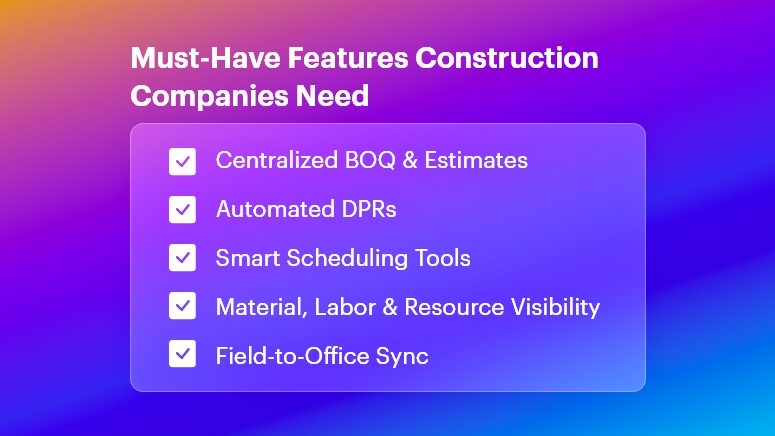
A modern construction management solution solves these challenges through real-time syncing, digital documentation, automated tracking, and structured workflows. This ensures every stakeholder — from site engineers to project directors — operates with clarity, speed, and accuracy.
Top 10 Must-Have Features in a Construction Management Solution
1. BOQ and Estimate Management
A strong construction management solution must include dynamic BOQ and estimate capabilities.
- Centralizes all quantities, materials, activities, and rate contracts, ensuring every team member works from a single, version-controlled BOQ.
- Automates calculations for material requirements, estimated costs, and work packages, reducing manual errors and improving pricing accuracy.
- Supports multi-level BOQs for EPC, infrastructure, and large commercial projects, enabling granular control over item-level budgeting.
2. DPR Automation and Daily Site Reporting
DPR delays cause downstream issues across billing, planning, and procurement.
- Automated DPR templates help site engineers submit daily progress in minutes, capturing work done, labor, machinery, and material used.
- Real-time visibility helps project managers track progress against planned schedules, reducing reporting gaps and manipulation.
- Photo and document attachments allow accurate verification, improving accountability and reducing disputes.
3. Project Planning and Schedule Tracking
Efficient planning is essential for controlling time, cost, and quality.
- Built-in Gantt charts and activity sequencing help teams visualize dependencies and set realistic timelines, especially for multi-contractor projects.
- Real-time schedule tracking highlights delays before they escalate, allowing proactive corrective action.
- Baseline vs. actual tracking improves forecasting, ensuring leadership always knows where projects stand.
4. Resource, Labor, and Workforce Management
Labor inefficiency is one of the biggest cost drivers in construction.
- Track labor attendance, productivity, and skill allocation, ensuring optimal workforce utilization across projects.
- Prevent overstaffing or understaffing, which often leads to productivity loss or unnecessary cost leakage.
- Generate labor productivity analytics, helping teams benchmark performance across activities and contractors.
5. Material Tracking and Inventory Management
Untracked material is a financial risk.
- Monitor material requests, issues, transfers, and consumption in real time, eliminating wastage and pilferage.
- Set reorder levels and automate purchase alerts, ensuring materials arrive before work stops.
- Track vendor deliveries against PO commitments, reducing discrepancies and billing disputes.
6. Purchase, Vendor, and Procurement Management
Procurement inefficiencies can derail timelines and budgets.
- Digitize purchase requisitions, approvals, vendor quotes, and POs, enabling faster purchasing cycles.
- Compare vendor quotations side-by-side, ensuring cost-efficient decisions.
- Maintain vendor performance metrics, helping businesses negotiate better contracts and avoid unreliable suppliers.
7. Task, Workflow, and Issue Management
Execution requires strong coordination across teams and subcontractors.
- Assign tasks with deadlines, responsibilities, and dependencies, ensuring daily work clarity.
- Automated reminders keep everyone aligned, reducing delays due to follow-up gaps.
- Issue logging helps identify defects, delays, safety observations, and roadblocks, enabling timely resolution.
8. Cost Control and Budget Monitoring
Cost overruns impact margins and client satisfaction.
- Real-time cost dashboards compare planned budgets with actual spending, helping teams detect leakage early.
- Track costs across labor, machinery, materials, subcontractors, and overheads, creating transparency and accountability.
- Predictive forecasting allows leaders to intervene before overruns escalate, improving profitability.
9. Real-Time Field-to-Office Sync
The biggest communication gaps occur when site updates are delayed.
- Instant syncing of DPRs, materials, approvals, and tasks, removes silos and eliminates outdated information.
- Project managers, QS teams, and owners receive real-time updates, enabling faster decisions and fewer misunderstandings.
- Every stakeholder shares the same dashboard, improving coordination across teams and locations.
10. Multi-Site Visibility and Centralized Reporting
Construction businesses often operate across multiple locations.
- A unified dashboard helps monitor all projects, contractors, and sites in one place, enhancing operational control.
- Centralized reporting provides insights on productivity, cost, delays, and resource usage, supporting data-driven decision making.
- Standardized processes ensure consistency, reducing project-level variability and risk.
Best Practices, Frameworks, and Actionable Tips for Implementing a Construction Management Solution
To maximize the impact of a construction management solution, construction teams must adopt structured workflows. Below are actionable, implementation-ready practices.
1. Streamline BOQ and Estimation Processes
- Always create multi-level BOQs to break down work into granular activities, helping QS teams price accurately and manage variations smoothly.
- Standardize rate contracts for materials and activities, reducing budget conflicts during execution.
- Integrate BOQ with material tracking and procurement, ensuring planned materials match actual consumption.
2. Optimize DPR Workflows
- Use predefined DPR templates to ensure uniform reporting across sites, reducing inconsistencies and missing information.
- Encourage daily submission deadlines to avoid backlog and maintain freshness of data.
- Attach photos, location data, and progress notes, improving transparency for remote managers.
3. Strengthen Planning and Scheduling
- Always create a project baseline before execution begins, allowing teams to measure deviations accurately.
- Break schedules into weekly and daily execution goals, making them easier to monitor.
- Use critical-path analysis to identify activities that directly impact project completion dates.
4. Improve Material Management Strategies
- Track every material issue and return from the store, ensuring consumption accuracy.
- Monitor supplier reliability by comparing deliveries against POs, identifying chronic delays.
- Use reorder alerts to avoid work stoppage due to material shortages.
5. Enhance On-Site Coordination and Communication
- Always use a centralized digital platform instead of WhatsApp for official instructions, ensuring audit trails.
- Define SOPs for task assignments, approvals, and inspections, removing ambiguity.
- Document all delays, issues, and dependencies, allowing managers to intervene effectively.
6. Strengthen Cost Control
- Create cost centers for labor, materials, equipment, and subcontractors, improving financial visibility.
- Compare planned vs. actual costs weekly, identifying leakage early.
- Digitize vendor quotes and purchases to prevent price manipulation or duplication.
7. Prevent Rework and Human Errors
- Maintain version-controlled drawings and documents, preventing outdated plan usage.
- Use digital checklists and quality workflows, ensuring consistency across teams.
- Enable issue logging and resolution tracking, reducing repeat mistakes.
8. Improve Multi-Site Coordination
- Standardize templates for DPRs, BOQs, and approvals across all sites, ensuring uniformity.
- Monitor cross-project performance metrics, identifying best practices and inefficiencies.
- Centralize communication and reporting, especially for leadership and regional managers.
Case Study
For example, a mid-sized infrastructure and commercial construction company, adopted OConstruction’s DPR Automation and BOQ Management features to overcome persistent reporting delays and cost miscalculations. Within 90 days, they achieved measurable improvements.
- DPR completion time dropped by 40%, enabling faster billing cycles.
- BOQ accuracy improved significantly due to centralized and version-controlled estimates.
- Material shortages reduced by 30%, thanks to real-time inventory insights.
- Project managers gained complete visibility into site progress, labor usage, and procurement activities.
- Rework incidents dropped due to better documentation and daily photo evidence.
Here’s the transformation: What was once a chaotic, paper-driven workflow became a fast, structured, and predictable process powered by a modern construction management solution.
Key Takeaways & Conclusion
Choosing the right construction management solution can dramatically improve project efficiency, financial control, and field visibility. The top 10 features, from BOQ management to DPR automation and cost control, ensure that teams eliminate errors, reduce rework, and improve coordination across sites.
When construction companies adopt these capabilities, they experience:
- Better planning and predictable execution
- Higher labor productivity and reduced wastage
- Accurate, real-time insights for faster decisions
- Lower cost leakage and improved margins
- Seamless field-to-office communication
To stay competitive, now is the ideal time to invest in a modern, reliable construction management solution that prepares your organization for future growth.
FAQs
1. What is a construction management solution and why is it essential?
A construction management solution is an integrated platform that helps teams manage BOQs, DPRs, scheduling, materials, and costs. It eliminates manual errors, improves visibility, and streamlines all site-to-office workflows.
2. How does a construction management solution improve DPR accuracy?
It standardizes DPR formats, automates calculations, enables photo attachments, and syncs updates in real time. This ensures accurate reporting, faster approvals, and better decision-making.
3. Can a construction management solution help reduce project delays?
Yes. With features like schedule tracking, task management, automated alerts, and dependency monitoring, teams identify issues early and prevent delays.
4. How does OConstruction support BOQ management?
OConstruction offers multi-level BOQs, centralized rate management, automated quantity calculations, and real-time tracking, ensuring estimated accuracy and cost control.
5. Is a construction management solution suitable for multi-site companies?
Absolutely. It centralizes reporting, standardizes workflows, and gives leadership a real-time consolidated view of all active projects.
6. How does a construction management solution improve cost control?
It tracks planned vs. actual spending, monitors consumption, prevents pilferage, and offers real-time dashboards for financial visibility.
7. Can small construction companies also benefit from a construction management solution?
Yes. Even small contractors gain efficiency by digitizing DPRs, managing materials better, improving labor productivity, and enhancing transparency.