


Labor productivity determines whether a construction project finishes on time, within budget, and at the expected quality level. While materials, equipment, and design matter, labor productivity ultimately converts plans into physical progress.
However, many construction sites struggle with declining labor productivity due to fragmented workflows, poor planning, skill gaps, rework, safety incidents, and a lack of visibility. As projects scale, these inefficiencies compound quickly.
Therefore, improving labor productivity on construction sites is not a tactical improvement—it is a strategic necessity. When teams deliberately design operations around labor productivity, they gain tighter cost control, predictable schedules, and stronger project outcomes.
This guide presents all-encompassing, field-tested ways to improve labor productivity on construction sites, covering planning, workforce management, technology, safety, incentives, and continuous improvement—so you do not need to look elsewhere.
What Labor Productivity Really Means in Construction
Labor productivity measures how efficiently workers convert time and effort into completed construction output. In practical terms, labor productivity answers a simple question: How much value does each labor hour create on site?
High labor productivity does not mean workers move faster at unsafe speeds. Instead, it means workers spend more time on value-adding tasks and less time waiting, reworking, searching for materials, or resolving coordination issues.
When labor productivity improves, projects benefit immediately through reduced delays, lower labor costs, higher morale, and improved quality.
Common Factors That Reduce Labor Productivity on Construction Sites
Before improving labor productivity, it is essential to understand what erodes it. Most productivity losses stem from systemic issues rather than worker effort.
- Poor project planning and unrealistic schedules
- Frequent design changes and unclear scope
- Material shortages and late deliveries
- Ineffective supervision and communication gaps
- Skill mismatches and inadequate training
- Safety incidents and unsafe site conditions
- Manual tracking and a lack of real-time visibility
Because these factors interact, improving labor productivity requires an integrated approach rather than isolated fixes.
Improve Labor Productivity Through Better Project Planning
Effective planning forms the foundation of labor productivity. When plans are clear, crews execute with confidence and consistency.
First, break down work into well-defined, sequenced tasks. Clear work packages reduce confusion and prevent idle time. Next, align schedules with realistic labor capacity instead of optimistic assumptions. When schedules reflect real constraints, labor productivity stabilizes.
Moreover, proactive planning minimizes last-minute firefighting, which is one of the biggest drains on labor productivity. As a result, workers spend more time building and less time waiting.
Strengthen Labor Productivity With Workforce Alignment
Labor productivity improves when the right skills match the right tasks at the right time. Skill mismatches slow execution and increase rework.
Therefore, assign crews based on skill proficiency, not just availability. Experienced workers should handle complex tasks, while junior workers assist and learn. Additionally, stable crew assignments foster teamwork, which naturally improves labor productivity over time.
When supervisors understand each worker’s strengths, labor productivity rises organically through better task alignment.
Use Technology to Increase Labor Productivity
Technology plays a direct role in improving labor productivity by eliminating manual overhead and improving visibility.
Digital tools streamline attendance tracking, task assignments, progress reporting, and labor forecasting. Consequently, supervisors spend less time on paperwork and more time managing performance.
Real-time dashboards also highlight productivity trends early. When teams identify slippage quickly, they can correct course before productivity losses escalate. Thus, technology acts as both a productivity enabler and an early warning system.
Reduce Rework to Protect Labor Productivity
Rework is one of the most expensive productivity killers on construction sites. Every hour spent fixing errors directly reduces labor productivity.
Clear drawings, accurate specifications, and consistent communication significantly reduce rework. Additionally, quality checks at intermediate stages prevent small mistakes from becoming major setbacks.
When teams prioritize “right the first time” execution, labor productivity improves without increasing work pressure.
Improve Labor Productivity Through Material and Equipment Readiness
Even the best workers lose productivity when materials or equipment are unavailable. Waiting time silently destroys labor productivity.
Ensure materials arrive on site aligned with the work schedule. Likewise, maintain equipment proactively to avoid breakdowns during critical tasks.
When workers always have what they need, labor productivity remains steady and predictable.
Strengthen Site Communication to Boost Labor Productivity
Clear communication reduces confusion, errors, and downtime—all of which directly impact labor productivity.
Daily briefings align crews on priorities, safety requirements, and dependencies. Additionally, standardized communication channels ensure that changes reach everyone quickly.
As communication clarity improves, labor productivity rises because workers execute with fewer interruptions.
Prioritize Safety to Sustain Labor Productivity
Safety and labor productivity are inseparable. Unsafe sites experience frequent stoppages, investigations, and morale drops.
By enforcing safety protocols, providing proper training, and maintaining clean sites, organizations protect both workers and labor productivity. Moreover, safe workers perform with confidence, which enhances efficiency naturally.
Therefore, safety investments consistently deliver productivity returns.
Motivate Workers to Improve Labor Productivity
Motivation directly influences labor productivity. Workers who feel valued and recognized consistently perform better.
Clear expectations, fair incentives, and visible recognition encourage accountability. When workers see a direct link between performance and rewards, labor productivity improves sustainably.
Additionally, fostering a culture of respect and growth reduces absenteeism, further protecting labor productivity.
Measure and Track Labor Productivity Continuously
What gets measured gets improved. Tracking labor productivity allows teams to identify patterns, bottlenecks, and improvement opportunities.
Key productivity metrics include output per labor hour, task completion rates, rework hours, and idle time. When teams review these metrics regularly, they move from reactive problem-solving to proactive optimization.
Continuous measurement transforms labor productivity from a vague concept into a managed performance driver.
Build a Continuous Improvement Culture Around Labor Productivity
Sustainable labor productivity improvement does not come from one-time initiatives. Instead, it emerges from a culture of continuous improvement.
Encourage feedback from workers, supervisors, and planners. Test small changes, evaluate results, and scale what works. Over time, these incremental improvements compound into significant labor productivity gains.
When productivity becomes part of daily conversations, improvement becomes habitual rather than forced.
Final Thoughts: Labor Productivity Is a Leadership Responsibility
Improving labor productivity on construction sites requires leadership commitment, operational discipline, and consistent execution. While tools and techniques matter, mindset matters more.
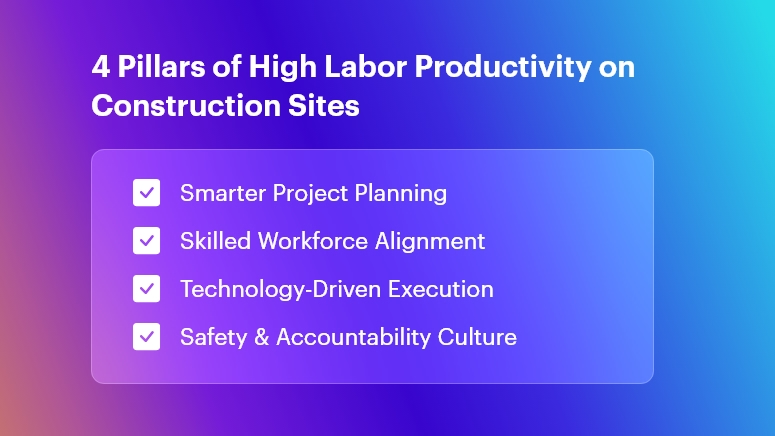
By aligning planning, workforce management, technology, safety, and accountability around labor productivity, construction teams create sites that run smoother, faster, and more profitably.
Ultimately, labor productivity is not about pushing workers harder—it is about designing systems that allow workers to perform at their best, every single day.
Frequently Asked Questions (FAQs)
1. What is labor productivity in construction?
Labor productivity in construction measures how efficiently workers convert labor hours into completed construction output. It focuses on maximizing value-added work while minimizing idle time, rework, and delays.
2. Why is labor productivity important on construction sites?
Labor productivity directly impacts project timelines, labor costs, quality, and profitability. Higher labor productivity leads to faster completion, better cost control, and improved workforce morale.
3. What are the main causes of low labor productivity in construction?
Common causes include poor planning, skill mismatches, material delays, frequent design changes, safety issues, ineffective communication, and lack of real-time visibility into site operations.
4. How does project planning improve labor productivity?
Effective project planning improves labor productivity by defining clear tasks, sequencing work correctly, aligning schedules with workforce capacity, and reducing last-minute disruptions.
5. How can workforce management increase labor productivity?
Labor productivity improves when workers are assigned tasks based on skill levels, crews remain stable, and supervisors clearly understand individual strengths and responsibilities.
6. How does technology help improve labor productivity on construction sites?
Technology improves labor productivity by automating attendance tracking, task allocation, progress reporting, and performance monitoring, enabling faster decisions and reducing manual overhead.
7. How does rework affect labor productivity?
Rework significantly reduces labor productivity by consuming labor hours without adding new value. Preventing rework through clear drawings, quality checks, and communication preserves productivity.
8. Why is safety critical to labor productivity?
Unsafe sites experience stoppages, injuries, and low morale, all of which reduce labor productivity. Strong safety practices create stable, confident crews that work more efficiently.
9. How should labor productivity be measured in construction?
Labor productivity can be measured using metrics such as output per labor hour, task completion rates, idle time, rework hours, and schedule adherence.
10. Can labor productivity be improved without increasing worker pressure?
Yes. Sustainable labor productivity improvement comes from better systems, planning, tools, and communication—not from pushing workers harder or increasing unsafe work speeds.