

Environmental contractors operate in one of the most highly regulated and risk-intensive sectors of construction and infrastructure services.
From hazardous waste handling and remediation projects to industrial clean-ups and environmental impact works, contractors must meet strict safety and compliance requirements on every site, every day.
However, despite the complexity of their work, many environmental contractors still depend on manual checklists, paper permits, email-based approvals, and disconnected spreadsheets.
As a result, teams often struggle with missed inspections, outdated permits, incomplete audit trails, and delayed corrective actions. Over time, these gaps expose organizations to penalties, project delays, and reputational risk.
As regulatory scrutiny increases and clients demand greater transparency, manual processes can no longer keep up. Therefore, managing safety compliance construction digitally has become essential.
This is exactly where environmental contractor software delivers value by connecting safety, compliance, and documentation into a single, traceable, and audit-ready system.
This guide explains how environmental contractors can use environmental contractor software to digitize safety and compliance workflows, reduce regulatory risk, and improve operational control.
Why Environmental Contractors Must Digitize Safety and Compliance
Digital safety management is not merely about efficiency. More importantly, it is about control, accountability, and proactive risk reduction. Environmental contractors face compliance requirements that are far more complex than standard construction projects, often involving multiple authorities, evolving site conditions, and continuous audits.
Because environmental sites change daily, static paper records quickly become outdated. Furthermore, regulators increasingly expect time-stamped, verifiable, and searchable digital records rather than scanned documents or manual logs. As project volumes and geographic spread increase, these expectations only intensify.
By adopting environmental contractor software, organizations centralize safety compliance construction workflows, gain real-time visibility across sites, and ensure every action is documented consistently. As a result, compliance becomes systematic rather than reactive.
What Environmental Contractor Software Must Deliver
A modern digital compliance platform must go far beyond basic document storage. Instead, environmental contractor software should actively guide both field teams and compliance managers through standardized workflows that enforce best practices.
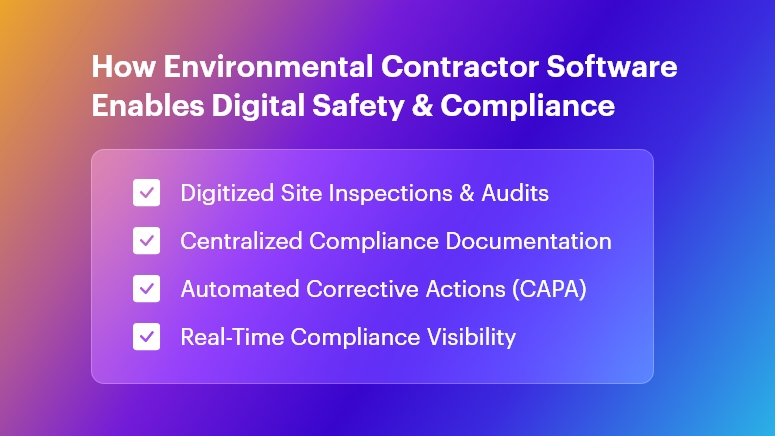
At a minimum, the system should support mobile-first inspections, structured incident reporting, centralized document control, audit-ready dashboards, and training verification. When these capabilities work together, safety compliance construction becomes embedded into daily operations rather than treated as a periodic task.
Most importantly, environmental contractor software ensures that safety processes are followed consistently across projects, regardless of location or team size.
How Digital Safety Workflows Work on Real Projects
In a digital environment, daily safety management becomes structured and predictable. For example, a site engineer can complete a safety inspection directly from a mobile device while on-site. The system automatically captures the time, location, and photographic evidence, eliminating manual errors and backdated entries.
If the inspection identifies a non-compliance issue, environmental contractor software immediately generates a corrective action. Supervisors receive notifications, assign responsibilities, and track resolution progress within the same platform. Once the issue is resolved, closure evidence is uploaded and verified digitally.
Because every step is logged automatically, the entire workflow forms an immutable audit trail. Consequently, unresolved safety issues and missing documentation become far less common.
Managing Permits and Regulatory Renewals Digitally
Permit and license management is another critical challenge for environmental contractors. Paper-based tracking often leads to missed renewals, expired approvals, and last-minute compliance firefighting.
With environmental contractor software, permit workflows become centralized and automated. Teams initiate permit applications digitally, attach required documentation, and route approvals through structured workflows. Automated reminders alert stakeholders well before expiry dates, while field teams can access approved permits in real time.
As a result, safety compliance construction remains uninterrupted across all active projects.
Safety and Compliance Documents That Benefit Most from Digitization
Environmental contractors manage a wide range of safety and compliance documents. Digitizing these records improves consistency, accessibility, and audit readiness across all sites.
Key documents commonly managed through environmental contractor software include:
- Pre-start safety and risk assessment records
- Daily toolbox talk logs with attendance confirmation
- Incident and near-miss reports
- Corrective and preventive action (CAPA) documentation
- Regulatory submissions and approvals
- Environmental inspection and monitoring reports
By standardizing these documents digitally, organizations enforce a uniform safety compliance construction framework across projects and teams.
Integrations That Strengthen Digital Compliance
Environmental contractor software delivers even greater value when integrated with other operational systems.
Integrations with GIS platforms allow safety incidents and inspections to be mapped to physical locations.
Connections with HR and payroll systems ensure only certified personnel access regulated sites.
Additionally, ERP and project accounting integrations link compliance events to cost and risk exposure, while laboratory system integrations attach testing results directly to project records.
Together, these connections transform environmental contractor software into a centralized compliance intelligence platform.
Maintaining Audit-Ready Compliance at All Times
Audit readiness should not be a last-minute activity. Instead, successful environmental contractors treat compliance as a continuous process supported by disciplined digital practices.
Organizations that maintain a single source of truth, enforce digital approvals, capture visual evidence, and conduct internal audits using the same workflows as regulators experience significantly less audit stress.
Environmental contractor software makes this approach practical by embedding compliance directly into daily operations.
Measuring Safety and Compliance Performance
One of the most powerful advantages of environmental contractor software is the ability to measure safety compliance construction objectively.
Instead of relying on anecdotal reporting, leadership teams can track real-time performance indicators.
Common metrics include inspection completion rates, corrective action closure times, incident frequency, permit compliance percentages, and audit response times.
By monitoring these KPIs consistently, organizations can identify trends early and continuously improve safety outcomes.
Implementing Environmental Contractor Software Successfully
Successful digital transformation requires more than software deployment. Environmental contractors must manage change carefully to ensure adoption in the field.
A phased rollout approach works best. Starting with a pilot project allows teams to refine workflows, gather feedback, and build confidence.
Training site supervisors as champions accelerates adoption, while iterative improvements ensure the system fits real-world conditions.
When usability remains the priority, environmental contractor software adoption scales smoothly across projects.
Choosing the Right Environmental Contractor Software
Selecting the right platform directly impacts long-term safety and compliance effectiveness.
Environmental contractors should prioritize solutions that perform reliably in field conditions, support customizable workflows, and provide strong audit trails.
Equally important are integration capabilities, data security standards, and proven experience supporting safety compliance construction use cases.
The right environmental contractor software becomes a long-term operational asset rather than just another tool.
Conclusion: Digital Safety as a Strategic Advantage
For environmental contractors, safety and compliance are no longer back-office responsibilities. Instead, they are strategic capabilities that influence project success, client trust, and business growth.
By implementing environmental contractor software, organizations can unify safety compliance construction workflows, eliminate documentation gaps, and respond confidently to audits and regulatory scrutiny.
Ultimately, digital safety systems reduce risk, improve transparency, and create resilient operations that scale with future demand.
Frequently Asked Questions
1. What is environmental contractor software?
Environmental contractor software is a digital platform designed to help environmental service providers manage safety, compliance, inspections, documentation, and audits from a centralized system.
It replaces manual paperwork with structured workflows, making safety compliance construction processes more accurate, traceable, and audit-ready.
2. How does environmental contractor software improve safety compliance?
Environmental contractor software improves safety compliance by digitizing inspections, incident reporting, and corrective action workflows. It ensures:
- Real-time visibility into site safety
- Automated reminders for inspections and permits
- Documented audit trails for regulators
This reduces human error and strengthens compliance across all projects.
3. Can digital safety systems be used on remote or offline sites?
Yes. Most modern environmental contractor software platforms support offline functionality.
Field teams can complete inspections, capture photos, and log incidents without internet access, and the data syncs automatically once connectivity is restored.
4. How does digital documentation help during regulatory audits?
Digital documentation creates time-stamped, tamper-proof records that auditors trust. During audits, contractors can instantly retrieve:
- Inspection histories
- Permit approvals
- Training records
- Corrective action closures
This significantly reduces audit preparation time and compliance risk.
5. Is environmental contractor software suitable for small contractors?
Absolutely. Environmental contractor software scales to fit small and mid-sized contractors by:
- Reducing administrative workload
- Standardizing safety practices
- Lowering the risk of penalties
Even small teams benefit from having structured safety compliance construction workflows.
6. What types of safety documents can be managed digitally?
Environmental contractors can manage a wide range of documents digitally, including:
- Pre-start safety checklists
- Toolbox talk records
- Incident and near-miss reports
- Permits and certifications
- Environmental inspection and monitoring reports
All documents remain centrally stored and version-controlled
7. How does the software support corrective and preventive actions (CAPA)?
When a safety issue is identified, environmental contractor software automatically generates a CAPA workflow.
This assigns responsibility, tracks deadlines, captures closure evidence, and maintains a full audit trail — ensuring issues are resolved and verified systematically.
8. Can environmental contractor software integrate with other business systems?
Yes. Most platforms integrate with ERP, HR, payroll, GIS, and laboratory systems
These integrations connect safety compliance construction data with operational and financial systems, improving overall visibility and decision-making.
9. What security measures protect sensitive compliance data?
Reputable environmental contractor software includes enterprise-grade security such as:
- Role-based access controls
- Data encryption
- Secure cloud hosting
- Audit logs for all actions
These measures ensure sensitive safety and regulatory data is protected.
10. How long does it take to implement digital safety and compliance software?
Implementation timelines vary, but most environmental contractors can deploy core safety workflows within 30 to 60 days.
Starting with a pilot project and gradually scaling helps ensure smooth adoption and long-term success.