


The construction industry is no longer experimenting with digital tools. Instead, it is entering a decisive phase of technology-driven transformation. Rising project complexity, shrinking margins, labor shortages, and stricter compliance requirements are forcing firms to rethink how work gets planned, executed, and controlled.
As a result, construction technology trends are not emerging as optional upgrades. Rather, they are becoming operational necessities. In 2026, technology adoption will accelerate not because it is innovative, but because it is unavoidable.
This guide explains the most important construction technology trends driving adoption in 2026, why they matter, and how construction companies can prepare strategically instead of reacting late.
Why Construction Technology Adoption Is Accelerating
Traditionally, construction has lagged behind other industries in digital adoption. However, this gap is closing rapidly. The reason is simple: operational pressure has reached a tipping point.
Project owners demand transparency. Regulators demand documentation. Clients expect faster delivery. Meanwhile, skilled labor remains scarce. Under these conditions, manual workflows break down.
Therefore, construction technology trends are gaining traction because they directly address these pain points. Technology now acts as a force multiplier for productivity, compliance, and profitability.
Key adoption drivers include:
- Increasing project scale and multi-location execution
- Tight profit margins and cost overruns
- Workforce shortages and skill gaps
- Growing compliance and safety requirements
- Demand for real-time project visibility
Together, these factors are reshaping how construction businesses operate in 2026.
Trend 1: Platform-Based Construction Management
One of the strongest construction technology trends is the shift from fragmented tools to unified platforms. Instead of managing projects through disconnected spreadsheets, emails, and standalone apps, companies are consolidating operations into centralized systems.
This transition matters because fragmentation causes delays, errors, and misalignment. In contrast, platform-based systems create a single source of truth across teams.
Key capabilities driving adoption include:
- Centralized project planning and scheduling
- Unified cost tracking and budget control
- Real-time collaboration across sites and offices
- Integrated document management and approvals
As a result, decision-making improves because leaders can see execution, cost, and risk in one place.
Trend 2: Data-Driven Decision Making Becomes Standard
In 2026, construction firms will no longer rely on gut instinct alone. Instead, construction technology trends show a clear move toward data-backed execution.
Modern construction platforms now convert raw activity into actionable insight. They track progress, productivity, delays, and cost deviations continuously. Consequently, managers can intervene early instead of reacting after damage occurs.
Data-driven construction enables:
- Predictive identification of schedule slippage
- Early detection of budget overruns
- Performance benchmarking across projects
- Objective subcontractor and crew evaluation
Therefore, data is no longer retrospective. It becomes operational intelligence.
Trend 3: Automation of Repetitive Construction Workflows
Another defining construction technology trend is workflow automation. Construction teams spend an excessive amount of time on repetitive administrative tasks. In 2026, automation significantly reduces this burden.
Automation applies across the project lifecycle, not just finance or HR. From approvals to reporting, repetitive steps are increasingly system-driven.
Common automation use cases include:
- Automated work order approvals
- Digital inspection and checklist workflows
- Auto-generated compliance documentation
- Scheduled progress and cost reports
As a result, teams redirect time toward execution rather than administration.
Trend 4: Mobile-First Construction Operations
Construction work happens on-site, not behind desks. Therefore, mobile-first technology adoption continues to dominate construction technology trends in 2026.
Mobile platforms allow site teams to access, update, and validate information in real time. Consequently, delays caused by information gaps disappear.
Mobile construction tools enable:
- Real-time site updates and issue reporting
- Instant access to drawings and documents
- On-site approvals and sign-offs
- Faster communication between field and office
Because information flows instantly, productivity improves across the board.
Trend 5: Digital Safety and Compliance Management
Safety and compliance are no longer managed through paper checklists. Instead, digital systems are becoming central to risk management strategies.
Among all construction technology trends, digital compliance stands out because it directly impacts liability, reputation, and project continuity.
Digital safety platforms support:
- Standardized safety inspections
- Incident reporting with audit trails
- Permit and certification tracking
- Compliance-ready documentation
As regulatory scrutiny increases, digital compliance becomes a business safeguard rather than an overhead.
Trend 6: Integration Between Construction and Enterprise Systems
Construction does not operate in isolation. It connects with finance, procurement, HR, and asset management. Therefore, integration is emerging as a core construction technology trend.
In 2026, construction platforms increasingly connect with ERP, accounting, and procurement systems. This integration eliminates data silos and manual reconciliation.
Benefits include:
- Real-time budget and cost synchronization
- Accurate cash flow forecasting
- Transparent procurement workflows
- Unified reporting across departments
Consequently, construction leaders gain enterprise-wide visibility instead of fragmented reports.
Trend 7: AI-Ready Construction Data Foundations
While artificial intelligence attracts attention, its real impact depends on data readiness. Therefore, construction technology trends emphasize clean, structured, and centralized data.
In 2026, AI adoption focuses less on hype and more on practical use cases such as forecasting, anomaly detection, and resource optimization.
AI-ready construction platforms support:
- Schedule risk prediction
- Cost deviation alerts
- Resource allocation optimization
- Pattern detection across projects
Thus, AI becomes a decision-support layer, not a replacement for expertise.
Trend 8: Sustainability and ESG-Driven Technology Adoption
Sustainability requirements increasingly influence construction operations. As a result, construction technology trends now incorporate environmental and social accountability.
Technology helps firms measure, report, and optimize sustainability metrics without manual effort.
Key areas include:
- Material usage tracking
- Waste and energy monitoring
- ESG compliance documentation
- Sustainability reporting for stakeholders
In 2026, digital sustainability becomes a competitive advantage rather than a regulatory burden.
How Construction Companies Should Prepare for 2026
Adopting construction technology is not about buying software. Instead, it requires operational alignment and leadership commitment.
To prepare effectively, companies should:
- Audit existing workflows and inefficiencies
- Identify high-impact automation opportunities
- Standardize processes before digitization
- Prioritize platforms that scale with growth
- Invest in training and user adoption
By doing so, organizations align technology with business outcomes.
Final Thoughts: Technology as a Construction Growth Engine
In 2026, technology adoption in construction will no longer be reactive. Instead, it will be strategic, data-driven, and platform-centered.
The most successful firms will not chase every tool. Rather, they will adopt construction technology trends that improve visibility, reduce risk, and enhance execution.
Ultimately, construction technology is no longer about digitizing tasks. It is about building resilient, scalable, and future-ready construction businesses.
Frequently Asked Questions (FAQs)
1. What are the most important construction technology trends in 2026?
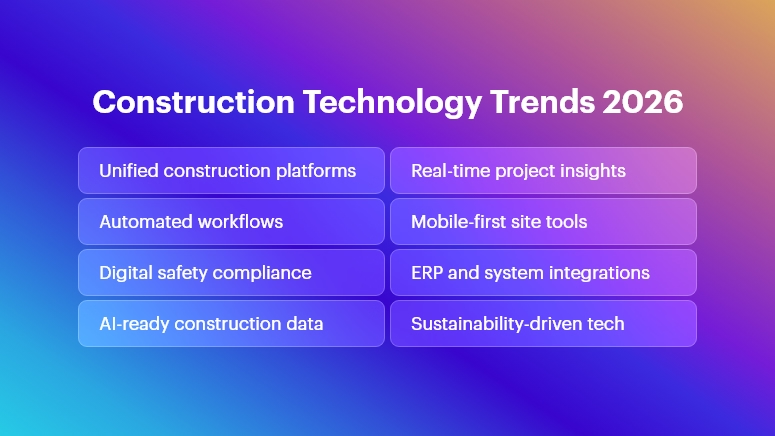
The most important construction technology trends in 2026 include platform-based construction management, workflow automation, mobile-first operations, data-driven decision-making, digital safety compliance, system integrations, and AI-ready data foundations. Together, these trends focus on efficiency, visibility, and risk reduction.
2. Why is construction technology adoption accelerating in 2026?
Construction technology adoption is accelerating because projects are becoming more complex while margins are shrinking. As a result, companies rely on construction technology trends to improve productivity, reduce errors, manage compliance, and gain real-time control over projects.
3. How do construction technology trends help reduce project delays?
Construction technology trends reduce delays by providing real-time visibility into schedules, resources, and site progress. Because teams can identify risks early, they can take corrective action before delays escalate into major issues.
4. Are construction technology trends suitable for small and mid-sized contractors?
Yes, modern construction technology trends are highly scalable. Many cloud-based platforms are designed specifically for small and mid-sized contractors, allowing them to digitize operations without heavy upfront investments or complex infrastructure.
5. How does automation impact construction project management?
Automation streamlines repetitive tasks such as approvals, reporting, inspections, and documentation. Therefore, construction teams spend less time on administration and more time on execution, making automation one of the most impactful construction technology trends in 2026.
6. What role does data play in construction technology trends?
Data plays a central role in construction technology trends by enabling predictive insights, performance tracking, and informed decision-making. Instead of relying on assumptions, construction leaders use real-time data to control costs, schedules, and resources.
7. How do construction technology trends improve safety and compliance?
Construction technology trends improve safety by digitizing inspections, incident reporting, and compliance documentation. As a result, companies maintain audit-ready records, reduce on-site risks, and meet regulatory requirements more consistently.
8. Will AI replace human decision-making in construction?
No, AI does not replace human expertise. Instead, AI-supported construction technology trends enhance decision-making by highlighting risks, patterns, and forecasts. Human judgment remains essential for interpreting insights and executing strategies.
9. Why is mobile-first technology critical in construction?
Mobile-first tools align with how construction teams actually work — on-site and in real time. Therefore, mobile adoption remains a key part of construction technology trends, enabling faster communication, instant updates, and improved coordination.
10. How should construction companies prepare for construction technology trends in 2026?
Construction companies should start by standardizing workflows, identifying inefficiencies, and choosing scalable platforms. Most importantly, they should align construction technology trends with business goals rather than adopting tools in isolation.